Every Great Cup of Coffee Has a Journey.
That delicious cup of coffee you enjoy every morning has traveled quite a distance before reaching your kitchen.
From coffee farms around the world to the roasting process that develops its signature flavors, producing great coffee involves careful growing, harvesting, processing, and roasting.
At Ocana Coffee Company, we're passionate about the craft behind every cup. Understanding how coffee is made helps explain why different coffees have such unique flavors — and why roasting makes such a difference.

1. It All Begins With a Coffee Cherry
Believe it or not, coffee actually starts as a fruit!
Coffee plants produce small fruits called coffee cherries. As they ripen, many varieties turn from green to bright red, although some develop yellow or other colors.
Inside each cherry are typically two seeds. Those seeds are what we know as coffee beans.
Occasionally, a cherry develops just one rounded seed instead of two. This is called a peaberry.
Coffee plants thrive in particular growing conditions, primarily in tropical and subtropical regions near the equator. Countries such as Brazil, Colombia, Guatemala, Costa Rica, and Ethiopia are well known for their coffee production.
Just like grapes used for wine, the environment where coffee grows can influence its flavor. Elevation, soil, rainfall, temperature, coffee variety, and agricultural practices all play important roles.
2. Harvesting the Coffee Cherries
Once the cherries ripen, it's time for harvest.
Depending on the farm, terrain, and available equipment, coffee cherries may be picked by hand or harvested mechanically.
Hand Picking
Workers selectively pick ripe cherries, sometimes returning to the same plants multiple times as additional fruit ripens. This approach can help separate cherries at different stages of maturity.
Mechanical Harvesting
Specialized equipment removes cherries from coffee plants. Mechanical harvesting is particularly useful on farms with suitable terrain and growing arrangements.
After harvesting, the cherries are prepared for processing.
The care taken during harvesting matters because cherry maturity and handling can influence the quality of the final coffee.
3. Processing: Bringing Out Coffee's Natural Character
Once harvested, coffee cherries must be processed to prepare their seeds for drying and eventual roasting.
Different processing methods can influence a coffee's sweetness, acidity, body, and overall flavor.
Three commonly used methods are:
Natural Process
In natural processing, the coffee cherries are dried with the fruit still surrounding the seeds.
As the cherries dry, the fruit and seed remain in contact, contributing to the coffee's eventual flavor characteristics.
Natural-processed coffees can exhibit pronounced fruit-like flavors, sweetness, and a fuller body.
Washed Process
Washed processing removes the outer skin and much of the fruit before drying.
The remaining sticky material, called mucilage, is removed through fermentation, mechanical methods, washing, or a combination of these techniques.
Washed coffees are often appreciated for their clarity and distinct origin characteristics.
Honey Process
Despite its name, honey processing doesn't involve adding honey.
Instead, the outer skin is removed while some of the sticky mucilage remains on the coffee seeds during drying.
Depending on the method and conditions, honey-processed coffees can develop a combination of sweetness, body, and clarity.
No single processing method guarantees better coffee. Each approach can produce excellent results when handled carefully.
4. Drying, Milling, and Preparing Green Coffee
After processing, the coffee must reach an appropriate moisture level for safe storage and transportation.
Beans may be dried on raised beds, patios, or in mechanical dryers, depending on the processing method and local conditions.
Once dried, they undergo milling to remove remaining protective layers.
The coffee is then sorted and graded. Producers and exporters may evaluate characteristics such as bean size, density, moisture, physical defects, and cup quality.
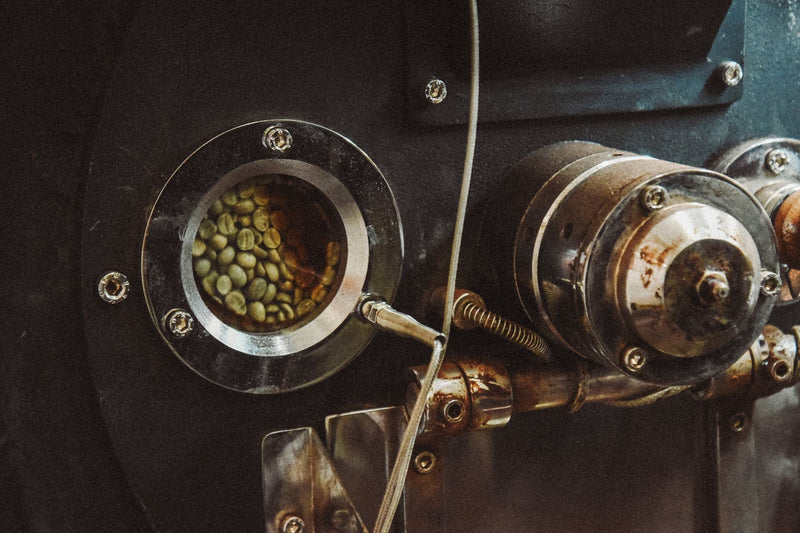
At this point, the beans are commonly called green coffee.
Green coffee looks very different from the rich brown beans you see in a bag of roasted coffee. It also hasn't developed the familiar aroma and flavor associated with brewing.
That's where the next step comes in.
5. Roasting: Where Coffee Comes to Life
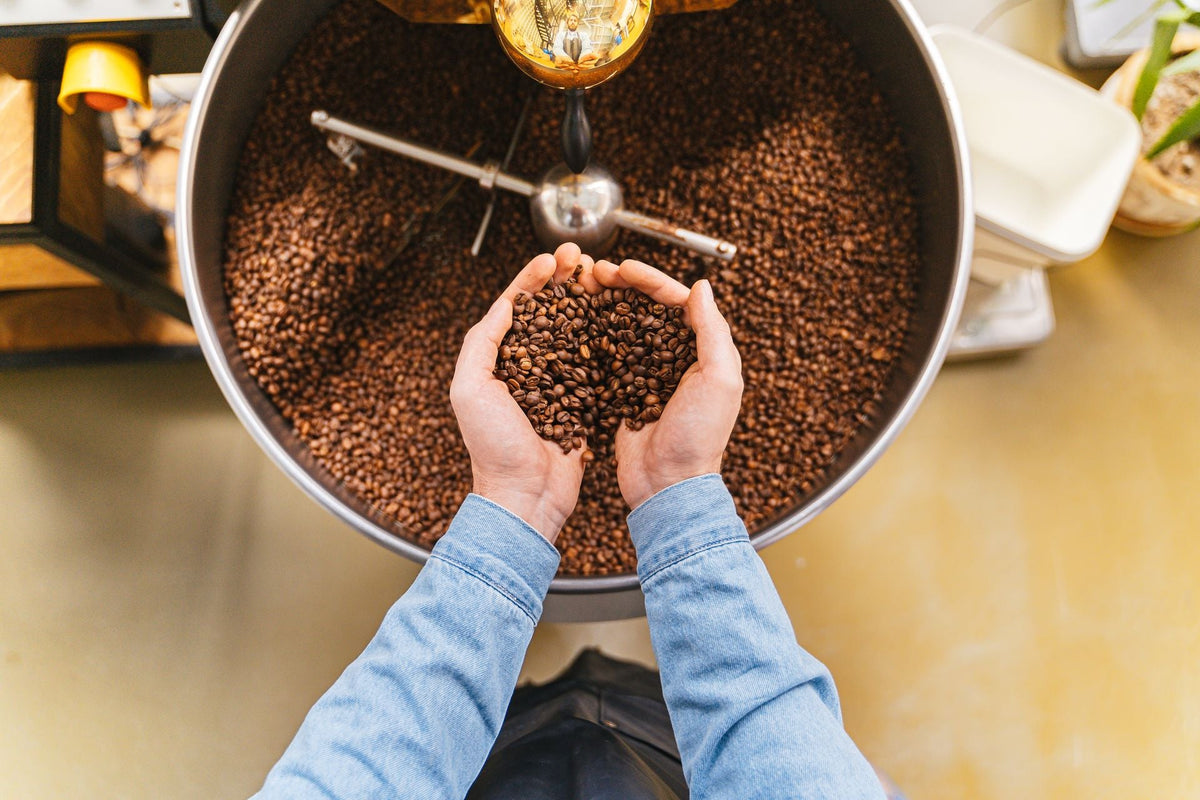
Roasting transforms green coffee into the flavorful, aromatic coffee we know and love.
During roasting, carefully controlled heat triggers complex chemical reactions inside the beans.
The beans change color, lose moisture, expand, and develop hundreds of aroma and flavor compounds.
The Maillard reaction and other heat-driven changes help create the chocolatey, nutty, caramel-like, toasted, and roasted characteristics associated with coffee.
Roasting requires careful attention to temperature, time, heat application, and the behavior of the beans throughout the process.
Understanding Roast Levels
Light Roast
Light roasts often highlight more of the coffee's original growing-region characteristics, including brighter acidity, floral aromas, and fruit-like flavors.
Medium Roast
Medium roasts offer a balance between the coffee's natural character and the flavors developed during roasting. Depending on the coffee, you may experience chocolate, caramel, nuts, and fruit.
Dark Roast
Dark roasts develop deeper roasted flavors and often feature more pronounced bittersweet, toasted, or smoky characteristics.
A darker roast doesn't necessarily mean more caffeine or a stronger brewed cup. Coffee strength depends on several factors, including the amount of coffee used and the brewing method.
6. The Ocana Coffee Roasting Story
For us, roasting is more than another step in coffee production. It's where our own story began.
Ocana Coffee Company started with three friends who loved coffee but couldn't find the flavors they were searching for at local coffee shops.
So we decided to experiment.
Our first coffee roaster wasn't a sophisticated commercial machine. It was a rebuilt and modified smoker that we used to roast coffee beans in a garage.
What began as a shared passion and plenty of experimentation eventually grew into the dedicated roasting facility we operate today.
While our equipment and operation have grown, our fascination with discovering great coffee flavors remains the same.
We're proud to roast coffee in Sumner County, Tennessee, and share that passion with customers near and far.
7. Grinding and Brewing: The Final Steps
After roasting, coffee is ready to be prepared for brewing.
Grinding breaks the roasted beans into smaller particles, allowing water to extract their soluble flavor compounds.
Different brewing methods require different grind sizes.
-
Espresso: Generally uses a fine grind and pressurized extraction.
-
Drip Coffee: Typically uses a medium grind, depending on the brewer.
-
Pour-Over: Uses a grind selected for the dripper, filter, and brewing recipe.
-
French Press: Often uses a coarser grind for immersion brewing.
-
Cold Brew: Frequently uses a medium-coarse to coarse grind with a longer brewing time.
Water quality, temperature, grind size, brew ratio, and contact time all influence the final cup.
There's no single perfect brewing method for everyone. Finding what you enjoy is part of the fun.
8. From Our Roaster to Your Home
The journey from coffee cherry to your morning cup involves countless decisions, skilled people, and careful attention to detail.
At Ocana Coffee Company, we're grateful to be part of that journey.
Whether you're drawn to the smooth chocolate and caramel notes of Antigua, the bold character of Bella Vista, or the richness of Reserve Espresso, each coffee offers its own experience.
We offer convenient online ordering, nationwide shipping, free local delivery in eligible areas, and subscription options that help keep your favorite coffee on hand.
Ready to Taste the Difference?
Now that you know how coffee makes its journey from farm to cup, discover the flavors for yourself.
Explore Ocana Coffee Company's selection of roasted coffees and find your new favorite.